Monday, November 28, 2011

Lipstick Analysis

       In this lab everyone in class put on lipstick or lip gloss, yes even the guys, and put our lips to a sheet of paper and found significant features of our lips.

    In my lips I noticed that I have a small lip print. I also noticed that my upper lip is bigger than my bottom lip and it curves more at the top.

We then re-did our pint and without any clues other than your original lip print, unnamed, and have another group try and find out whose lips are whose.

Our group successfully identified whose were whose because one lip had a smaller top than bottom and the curve in the others lips were the exact same. It also helped that they didn’t change  the way they put their print and they didn’t change the color they used on the original

Tuesday, November 22, 2011

Forensics Part 3: Handwriting Analysis

History of Handwriting Analysis
  1. Handwriting is a very personal and individual trademark of a person seeing how no two people have the exact same handwriting
  2. 2,000 years ago Aristotle realized there was a correlation between a person’s handwriting to their personality
  3. Around the same time the Chinese made the observation that there was a connection between some ones character and writing
  4. In 1622 an Italian physician and professor published a book describing the analysis of character through the analysis of handwriting
  5. Handwriting analysis was renamed graphology in the late 1800’s by Abbe Michon
  6. Alfred Binet, confirmed that handwriting traits revealed actual character traits
  7. http://graphicinsight.co.za/background.htm


List of Handwriting Characteristics
1. Line quality. Are the pen marks smooth and free flowing or shaky and wavering? This can be connected to the speed that the document was written at.

2. Spacing of words and letters. What is it the spacing between letters and words? Is it consistent?

3. Ratio of the relative height, width and size of letters. What is the ratio? Is it consistent?

4. Pen lifts and separations. Does the person stop to form new letters and begin words? Forgeries may have lifts in unusual places.

5. Connecting strokes. Are capitals connected to lowercase letters and are there connecting strokes between letters and words?

6. Beginning and ending strokes. Are these straight, curled, long or short, an upstroke or a down stroke?

7. Unusual letter formation. Are there any unusually formed letters such as backward, letters with a tail, or unusual capitals?

8. Shading or pen pressure. Is the pen pressure on the upward or the downward strokes?

9. Slant. Is slant left or right or straight up and down? Is there consistency between the slants of letters?

10.  Baseline habits. Is the writing above or below a line?

11.  Flourishes and embellishments. Are there any? If so what are they?

12.  Diacritic placement. How the t’s and i’s have crossed? Take note of the dotting of i’s, j’s. For example are the dots to the right or left of the letter?
13.
http://www.clt.uwa.edu.au/__data/page/112506/fsp10_handwriting.pdf


Picture and Analysis of Handwriting template.
State how the free handing forgery and tracing forgery differ using the 12 handwriting characteristics. In other words, how would you tell that they are forgeries?

  1. Freehand forgery is easy to identify because it wont have the same dotted i’s or crossed t’s and it can also have more space between letters and different angle of the letters
  2. Traced forgeries can be a little more difficult to identify because it will have the same attributes of the real signature or handwriting. You can identify traced forgeries because how hard the forger wrote by the indentations


Which do you think is easier as a forgery technique: free handwriting or tracing?
  1. For me tracing would be easier because I have awful handwriting and if I did freehand it would show that it is my handwriting but if I traced I would have a better chance with getting away with a crime


Reflection on the check forgery Activity? Did your group identify proper person/persons who did the forgeries? Which characteristics were the most distinguishing in your analysis?

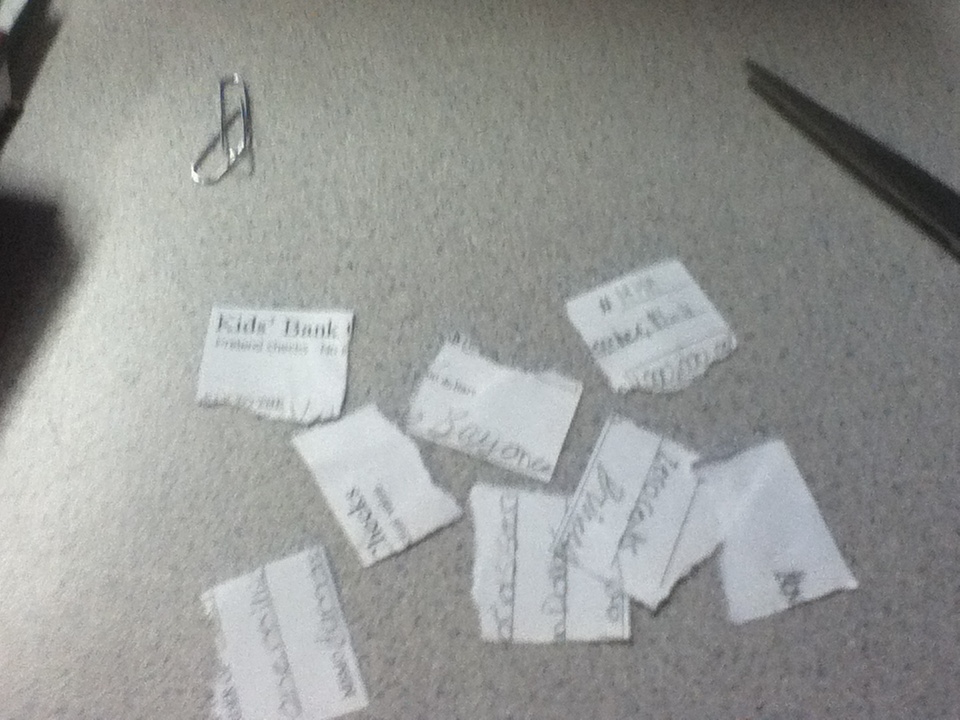
  1. In this activity we made a fake check with an alias and rip it up. We then gave them to another group and try to let them figure out who the check actually belongs to
  2. In our group we correctly identified the other groups checks. There were two people with multiple checks and with the help of the trace and freehand forgery template we correctly identified which check belonged to one person


Famous Case that uses Handwriting Analysis
  1. Ted Bundy was a serial killer that stalked and killed 36 college women and diagnosed with personality disorder
  2. Using his handwriting analysists were able to determine whether or not Bundy showed any signs of being a serial killer
  3. Two writing samples were taken from Ted were analysed and proved that he had a personality disorder but his writing showed that he was thoughtful and full of simplicity which made people think that he wasn’t a murderer
  4. Later they found that he did commit all the crime that he was charged of and they out him in jail
  5. https://docs.google.com/document/d/1q9jlP0R2SwrXH9iPbMqrw5SCSJl_Tx5r_mbG_R5T89k/edit?hl=en_US

Forensics Part 2: Hair/ Fiber

History of Hair/Fiber
  1. French scientist Edmond Locard first discovered the constantly people picked up and transferred little bits of dust, hair, fiber, and other material without knowing it
  2. He realized that this material were key to analyzing a crime scene, this was called the “Locard Exchange Principle” and it became the foundation for forensic science in the early 1990’s
  3. After this, Rudolf Virchow, a German Patholigist, showed that hair/ fiber were not unique enough to positively match a certain suspect to one or more victims,
  4. Then Paul L. Kirk established the fundamentals of microscopic hair/fiber analysis that is used used by scientists today. His groundbreaking textbook “Crime Investigation” is still an important text used in criminal investigation
  5. http://www.ehow.com/about_5597295_forensic-analysis-hair.html


Major Types of Fiber
  1. Cotton
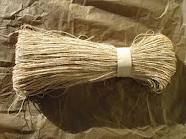
    1. Soft, fluffy staple fiber that grows in a boll, or protective capsule, around the seeds of cotton plants of the genus Gossypium
  2. Flax
    1. Oldest fiber crop in the world. Flax is used for the production of linen
  3. Wool
    1. Textile fiber obtained from sheep and certain other animals including cashmere from goats, mohair from goats
  4. Ramie
    1. Flowering plant in the nettle family Urticaceae, native to eastern Asia
  5. Silk
    1. Natural protein fiber, some forms of which can be woven into textiles. Best known type of silk is obtained from the cocoons of the larvae of the mulberry silkworm
  6. http://en.wikipedia.org/wiki/Clothing_material


Methods for Collecting Hair/Fiber
  1. May use combs, tweezers, containers and a filtered vacuum device to collect hair/ fiber at a crime scene. In a rape case the victim’s body will be examined for any hair’s or fibers. The hairs are then put in separate containers to be transported to a lab.
  2. If hairs/fibers are found and a suspect is found the investigators will search the home for the same fibers or test the suspects hair for a match.
  3. http://science.howstuffworks.com/csi4.htm


How to analyze and use hair/fiber data
  1. Put the hair on a dry microscope slide under the microscope and analyze specific qualities in the hair
    1. Under microscopes you can see if a hair has been dyed, if it fell out naturally or pulled out, if its human or animal, and where on the body the hair came from
  2. Hair can have DNA on it which can help speed up the process of finding a criminal
  3. Analyzing fiber is the same as analyzing hair. By putting it under a microscope and analyzing qualities in the fiber
    1. Certain characteristics can be found under the microscope such as: the patterns on the fiber, what color is is, was it color treated and what type of fiber it is
  4. http://www.eventbuddys.com/analyzing-hair-and-fibers.html


Reliability of Hair /Fiber crime Scene Data
  1. If a hair is pulled out of a suspects hair and the follicle is present it can one can find the DNA or if it is pulled out hard enough blood cells can be found on the tip of the follicle which can help determine the blood type
  2. It can also help narrow down suspects if fibers are found that aren’t in a certain suspects home or isn’t


Famous Court Case
  1. About 15 years ago James Driskell was put in jail for the murder of Perry Harder in which he did not commit
  2. Three hairs found at the crime scene were incorrectly analysed by Winnipe RCMP lab that placed Harder in Driskells van, or the scene of the murder
  3. After being analysed again they found the hairs were not Harders and proved that Driskell was innocent and wrongy convicted of Harders murder

Sunday, November 13, 2011

Forensics Part 1: Fingerprints

History of Fingerprints
1.       Fingerprints have been used for many years as a way to identify people, especially criminals.
a. First started in 1858 when Sir William Herschel, a British Administrator in India, required a signature and fingerprints on civil contracts

b. In 1892 Juan Vucetich made the first ever criminal fingerprint ID. He identified the print of a woman who murdered her two sons and cut her throat in an effort to blame another person. She left a bloody print on the door post which proved her as the murderer.

c. In 1917 the first palm print ID was made in Nevada. The bloody print of a palm was found on a letter left at the scene of a stage coach robbery and murder of its driver, this print was identified to Ben Kuhl.

d. The U.S. military adopts the use of fingerprints in 1905 shortly followed by police agencies and in 1908 the first official fingerprinting card was developed

e. 1924 is when the formation of ID Division of FBI came into place followed in 1980 with the first computer database of fingerprints was developed


Types of Fingerprints
1. Three main types of prints:
a. Visible prints
i. Visible prints are when they are left in some type of medium such as blood, dirt, ink or grease is visible to the naked eye. In these mediums the fingerprint is visible allowing them to be easily identified
b. Latent prints
i. Latent prints are not visible to the naked eye and are formed from sweat on the fingers or water, salt amino acids and oils contained in sweat. The sweat and fluids make prints must be developed before they can be seen or photographed and can be made visible by dusting, fuming or chemical reagents.
c. Impressed prints
i. Also called plastic prints impressed prints are indentations left in soft pliable surfaces like clay, wax, paint or other surfaces that take impressions. They are visible and can be seen or photographed without development

Methods of Collecting Fingerprints
  1. Dusting
    1. Most common of all methods. With the use of a paintbrush like brush and powder of Talc or Graphite, based on the surface, you can identify a print on the surface. By putting powder on the print and blowing excess powder away it can leave the marks of the ridges.
  2. Electric Pen
    1. In this method a metal filing brush and electric pen is used. the brush is really an electromagnet that takes iron filings. Just like the ordinary brushes, it does not effect the print. The print sticks to the oil and you can lift the print by using sticky tape or other adhesives.
  3. Special Chemical Bonding Agents
    1. In this method crime scene investigators will set the object in a heated area. Then they will make use of the fumes of superglue to warm the environment. A white substance should appear on the print making it easy to identify. People have been using this method for years.
  4. Gray Scale, Live scan and Biometric Gadgets.
    1. Used by police operatives this method uses 256 shades of gray by the gray scale in taking prints. Live Scan uses different types of laser technology in assessing fingerprints. To get a clear print to send off to databases for a match a glass pad is used. Aside from taking prints , they can be matched and searched for using a database so you don’t even need to take your suspect to the police station with the use of a biometric handheld gadget
  5. http://www.look4articles.com/Art/209347/39/Popular-Methods-of-Collecting-Fingerprints.html
Basic Shapes/ Patterns
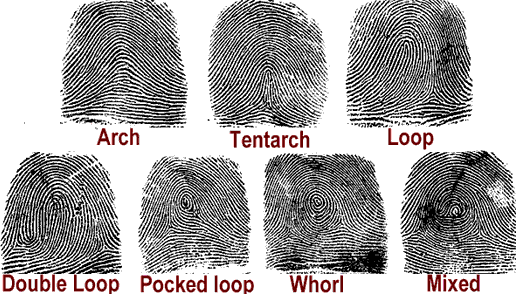
  1. Loops
    1. Most common. Must have one Core and Delta, point on a ridge at or near the point of divergence of two lines, and located at or directly in front of the point of divergence. Loops have a ridge count, the number of lines intersected if you draw a line from the Delta to the core.
    2. Double Loop
      1. Consists of two separate loop formations
  2. Arches
    1. Plain
      1. Ridges enter upon one side, make a rise or wave in the center and flow out the opposite side.
    2. Tented
      1. Has an angle, up thrusts, or two-three basic characteristics of a loop,
  3. Whorls
    1. A fingerprint with 2 or more Delta’s is  a whorl. It has one or more ridges, with 2 delta’s
    2. Double Loop
      1. Consists of two separate loop formations and distinct sets of shoulders and two delta’s
    3. Central Pocket Loop Whorls
      1. Consists of at least one recurving ridge, or a obstruction  at right angles to the line flow, with 2 delta’s
    4. Accidental Loop
      1. Has two different patterns with an exception of a plain arch, has 2 or more delta’s

 In my fingerprints I found I have Radial Loops with some Tented Arches